The Classics: famous holes in dailygolf
Most of dailygolf’s holes are made up fresh from the date. Now and then, though, a course swaps one of them for a famous hole, rebuilt by hand. There are twelve of them, three from each of four of the best-known courses in golf. Here’s where they come from and how they play.
How a Classic turns up
About one three-hole course in three has a Classic, in place of a generated hole of the same par, so the course is still a par 3, a par 4 and a par 5. Unlimited courses and games with friends already mix them in, and the daily course does from October 5, 2026. On the daily course they take turns: each of the twelve comes round once before any of them comes round again. A nine-hole game with friends can have none, one or two.
You’ll know when you’re on one, because the flyover names the hole it’s after.
Each one is built from a description of the real hole: how long it is and where it bends, how much it rises or falls from tee to green, how wide the fairway runs, the shape and tilt of the green, and where every bunker, creek, pond, wall, road, building and tree sits. A Classic looks the same every time you play it. The pin and the wind come from the course, so it never plays quite the same way twice.
These holes are tributes, drawn in the game’s own style. dailygolf has no connection with Augusta National, TPC Sawgrass, Pebble Beach or the Old Course.
Augusta National: Amen Corner
Augusta National Golf Club in Georgia hosts the Masters every April. The stretch from the second shot at the 11th to the tee shot at the 13th is known as Amen Corner, a name the golf writer Herbert Warren Wind gave it in 1958. Rae’s Creek winds through the middle of it, and many Masters have been won and lost there. Augusta’s holes are named after plants, and the game keeps their names.
No. 11, White Dogwood (par 4, 520 yards)
A long par 4 played downhill from a chute of pines, drifting right to a green with a pond at its left. The pond is the whole story. A long iron that starts at the flag and leaks left is wet, so the shot most players want is one that finishes on the right side of the green and leaves a long putt. A par here is a good score.
No. 12, Golden Bell (par 3, 155 yards)
One of the most famous short holes in golf. It plays over Rae’s Creek to a green that is wide but very shallow and set at an angle, so the right half is a longer carry than the left. There’s one bunker in front and two behind. Jordan Spieth made a seven here in the final round in 2016, and it cost him a second straight Masters.
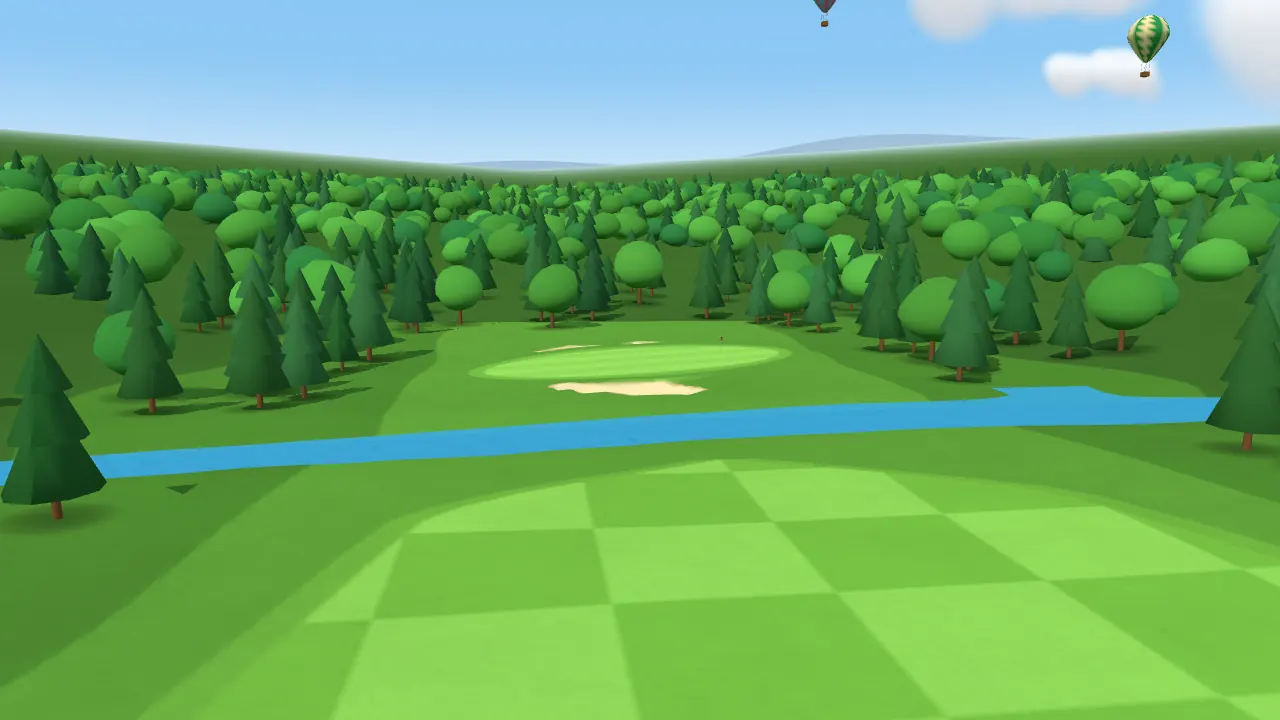
In dailygolf the wind on the Augusta holes is never more than a breeze, but there’s no room for error in length. Pick the club that carries the creek with a few yards to spare and aim at the left-center of the green, where the carry is shortest.
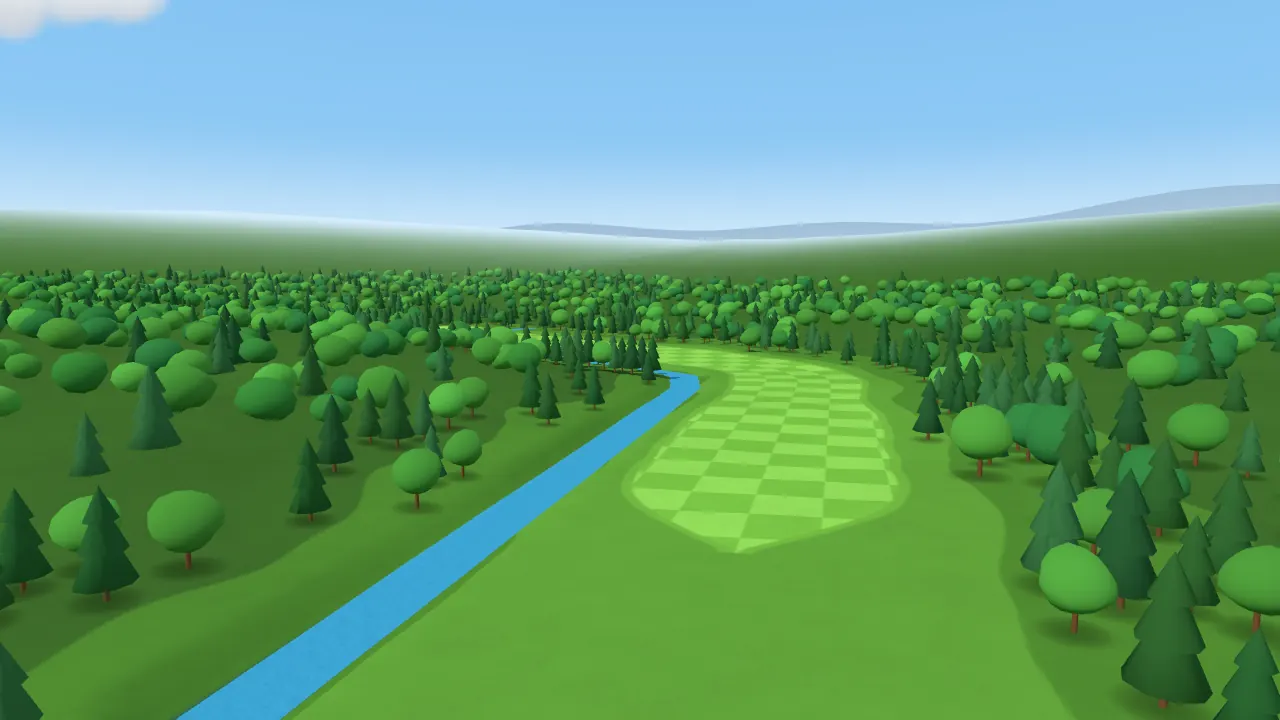
No. 13, Azalea (par 5, 510 yards)
A sharp dogleg left round azaleas and pines. A creek runs all down the left side and turns across the front of the green, with four bunkers behind it. It’s short enough to reach in two, which is why it’s so dangerous. A drive turned round the corner leaves a long iron over the creek. A drive through the corner leaves a decision.
TPC Sawgrass: the finish
The Stadium Course at TPC Sawgrass, in Ponte Vedra Beach, Florida, was designed by Pete Dye and is the home of The Players Championship. Its last three holes all have water, and they often decide the tournament. The hole names are dailygolf’s own.
No. 16, The Big Oak (par 5, 523 yards)
The easiest of the three, and a real chance at a birdie. It’s reachable in two if you can get past the big oak on the right of the fairway, with a lake that runs up the right and round the green. Lay up to the left and you have a wedge in, away from the water.
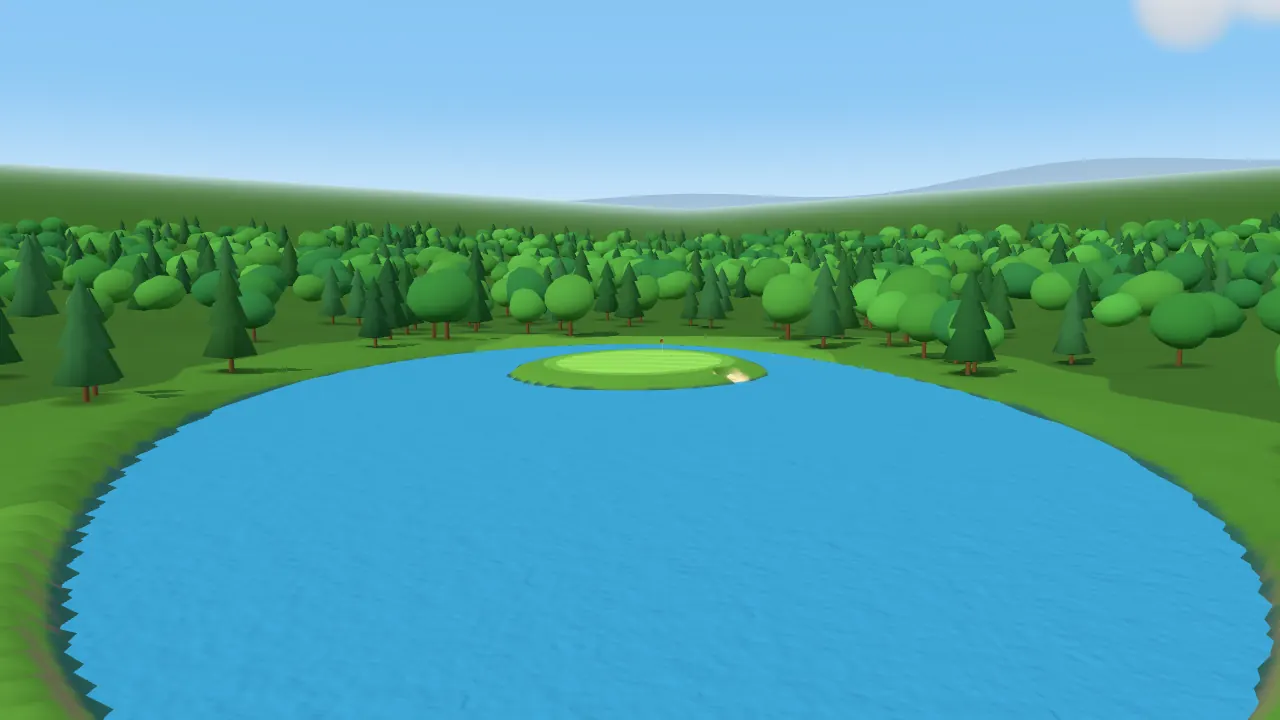
No. 17, The Island (par 3, 137 yards)
One of the most photographed holes in golf. The green sits on an island, with water from the front of the tee to beyond the back, and one small bunker at its front right. The story goes that the island was Alice Dye’s idea; she was Pete Dye’s wife and design partner. Tens of thousands of balls are fished out of the lake every year.
It’s only a wedge or a short iron, and on a calm day it’s an easy hole. In wind, it’s a coin toss. In dailygolf the wind at Sawgrass blows up to 8 mph. Play for the middle of the green whatever the pin, and remember that a ball landing on the back of the green can run off it.
No. 18, Lakeside Home (par 4, 462 yards)
A dogleg left with the lake all the way down the left side, from tee to green. Every shot is tempted to cut off a bit more of the water. The trees and rough on the right are a safer miss than anything left.
Pebble Beach: along the ocean
Pebble Beach Golf Links, on the Monterey Peninsula in California, opened in 1919 and has held the U.S. Open six times. Its holes along the cliffs above Carmel Bay are some of the most famous scenery in sport. dailygolf names these three itself.
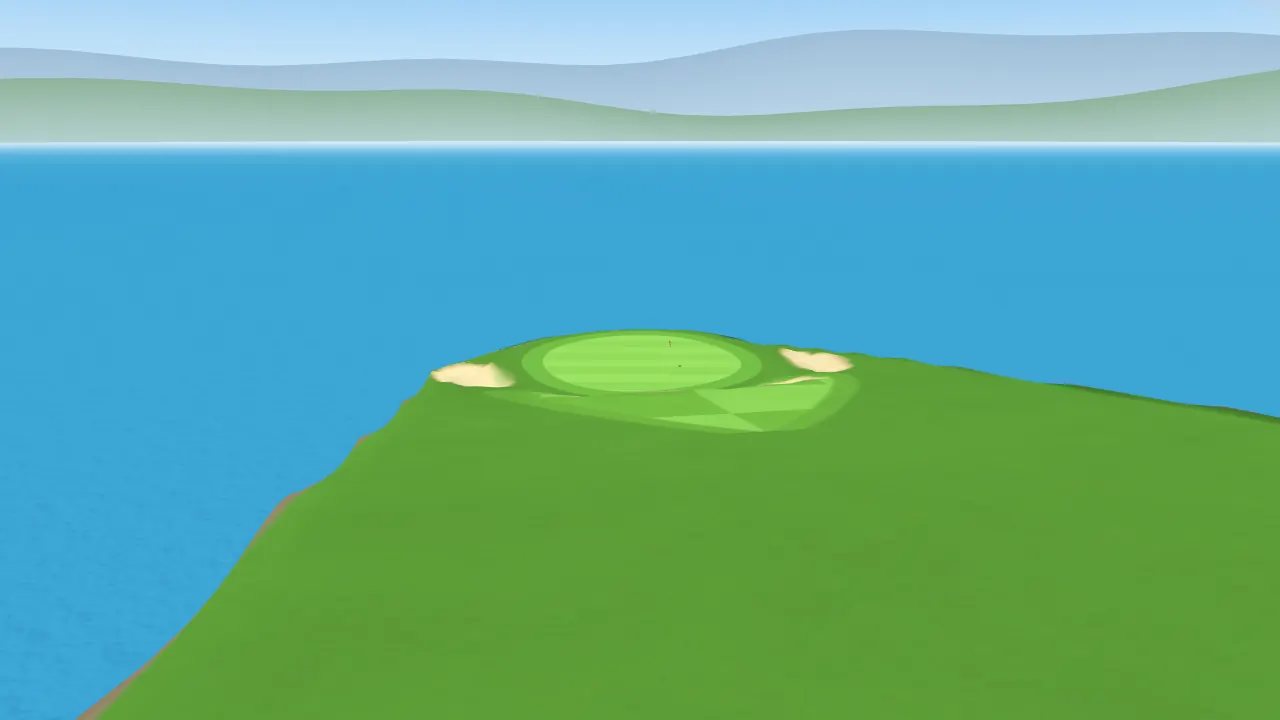
No. 7, Little Gem (par 3, 106 yards)
The shortest hole of the twelve. It runs straight down the hill to a tiny green on a point, with ocean on three sides and six bunkers around it. On a still day it’s a gentle wedge. When the wind comes off the water it gets much harder, because there’s nowhere to miss except sand.
No. 8, The Chasm (par 4, 428 yards)
The tee shot climbs the hill to where the fairway stops at the edge of a cliff. The second shot then has to carry an inlet of the ocean to a small green that slopes hard from back to front. Jack Nicklaus is often quoted calling it his favorite second shot in golf. In dailygolf, don’t hit the driver too well: the fairway ends, and the ocean doesn’t.
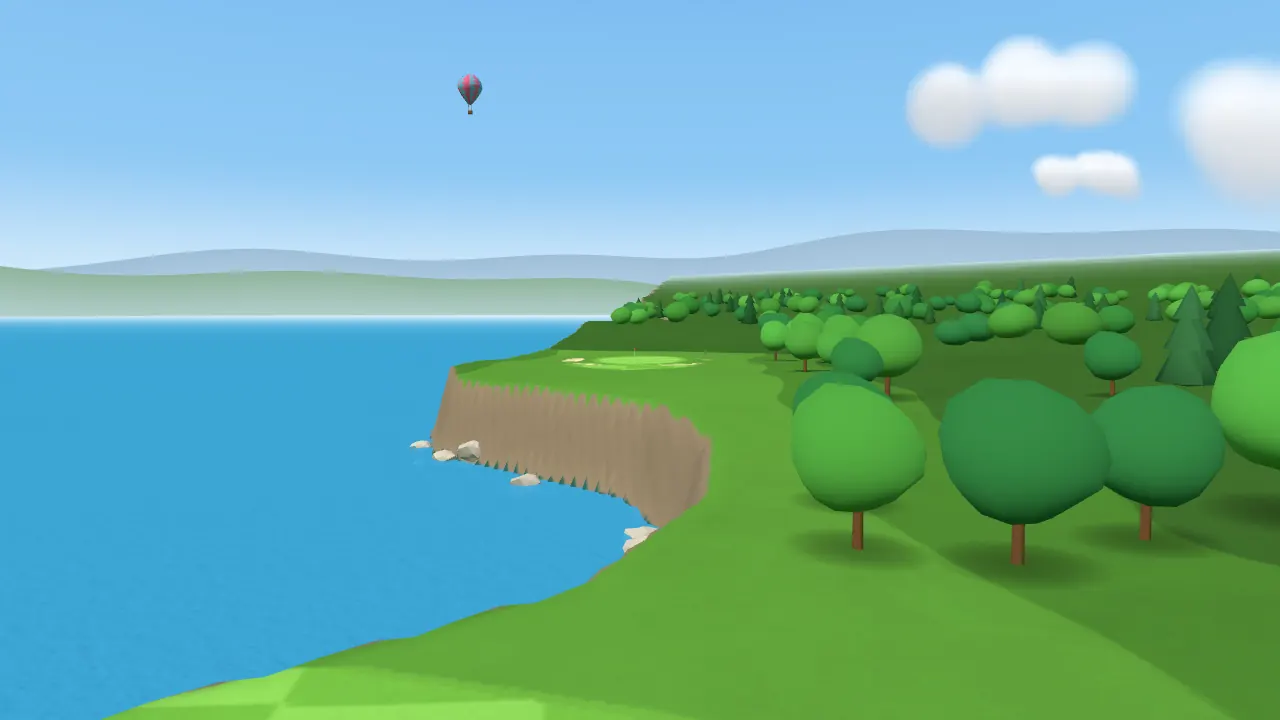
No. 18, Seawall (par 5, 543 yards)
One of golf’s great finishing holes. It sweeps left round the bay with the ocean all down the left, a tree in the fairway, another by the green, and a long bunker on top of the seawall. The more of the bay you cut off, the shorter the hole gets. In dailygolf the wind at Pebble Beach blows up to 9 mph, so check which way it’s going before you aim over the water.
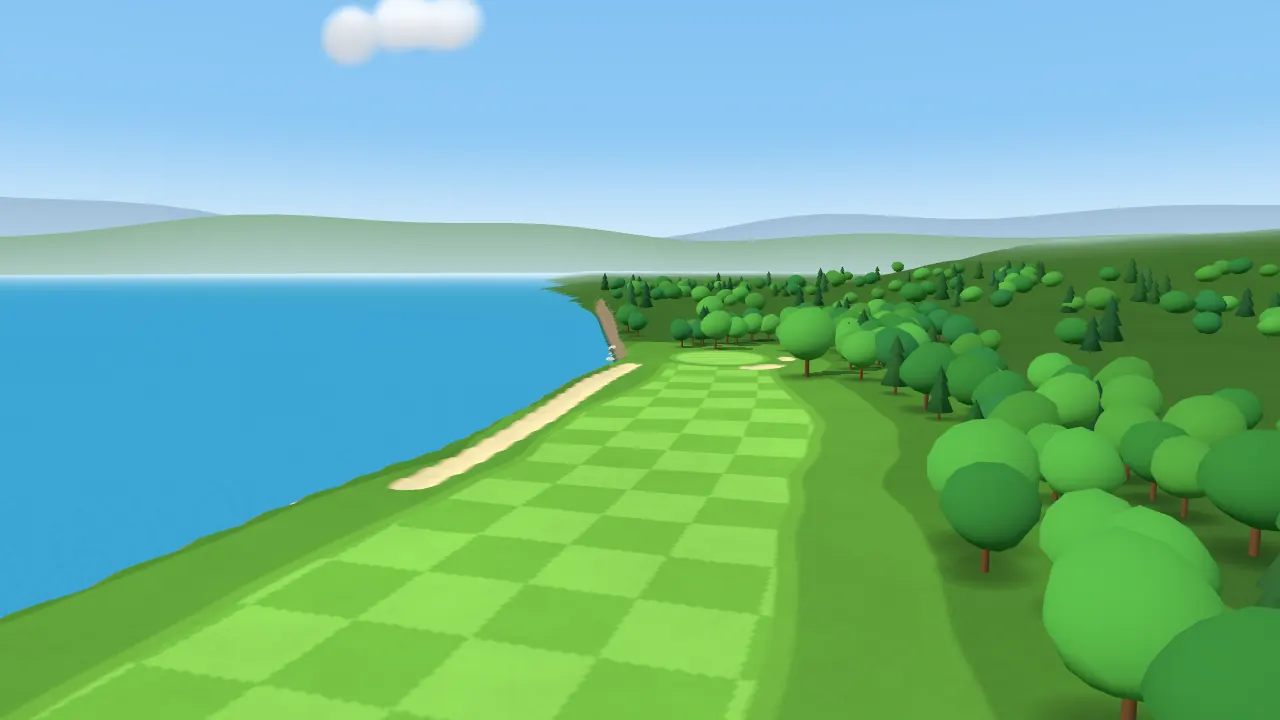
The Old Course, St Andrews
Golf has been played on the links at St Andrews, on the east coast of Scotland, for around six hundred years, and The Open has been held on the Old Course more often than anywhere else. It has few trees and a lot of wind, and in dailygolf it’s the windiest of the four, at up to 11 mph. Its holes have names of their own, and the game keeps them.
No. 1, Burn (par 4, 376 yards)
The widest fairway in golf, shared with the 18th, and not a single bunker. The danger is the Swilcan Burn, a stream that runs right across the front of the green, with out of bounds down the right. The drive is easy. The second shot needs enough club to carry the burn, because anything short is in the water.
No. 17, Road (par 4, 495 yards)
The Road Hole is often called the hardest par 4 in golf. The tee shot goes over the corner of a row of sheds, round to the right. The green is long and narrow and set at an angle, between the deep Road Hole bunker at its front left and the road behind it. Go long and you’re on the road. Go left and you’re in the bunker. The safe play is to the right side of the green, short of the flag, and to take your two putts.
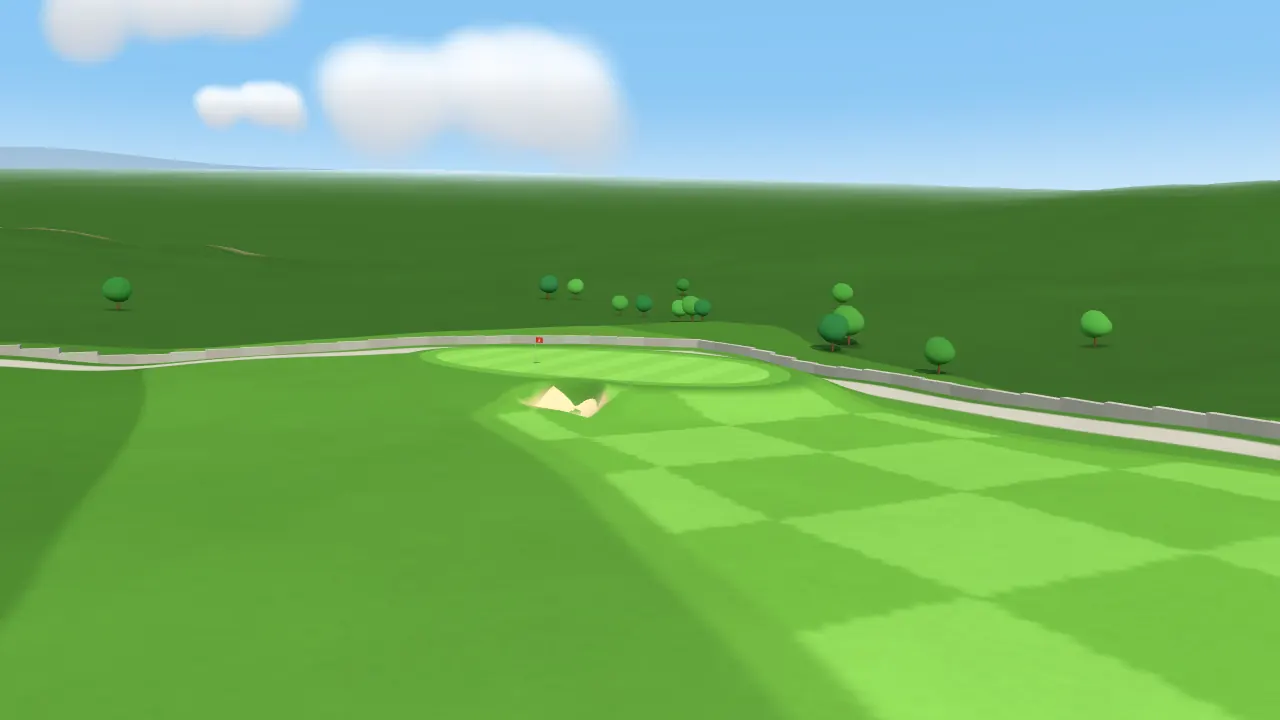
No. 18, Tom Morris (par 4, 357 yards)
Named after Old Tom Morris, four times the Open champion and for many years the keeper of the links. The drive crosses the Swilcan Burn and Granny Clark’s Wynd, a road that cuts across the fairway, to a huge green. In front of it is the Valley of Sin, a deep hollow that sends a short approach rolling back down. Out of bounds runs all down the right. The approach is only a wedge, but land it on the green: anything short can trickle back into the valley.
Playing the Classics well
- Look before you hit. Press V or the map button to see the whole hole. The flyover is quick, and these holes have their trouble in very particular places.
- Mind the wind. It’s gentlest at Augusta and strongest on the Old Course. The strategy guide shows how much a 10 mph wind moves each club.
- Aim for the fat part of the green. The famous pins are tucked near water and sand. Two putts from the middle of the green beats a chip from the bunker.
- Save the mulligan. A Classic is a likely place to need it. Water costs a stroke, and the mulligan takes back both the shot and the penalty.
Updated October 4, 2026.
Will today’s course have a Classic? Only one way to find out.
Play today’s course